

Gifting has never been easier
Perfect if you're short on time or are unable to deliver your gift yourself. Enter your message and select when to send it.



The Faces Behind The Farm At Byron Bay
The Farm at Byron Bay is home to a community of passionate growers, farmers and makers dedicated to regenerative farming, sustainable agriculture and producing exceptional local food and flowers.
Discover the stories of four of the people shaping life on the farm and hear their stories - from growing organic produce and raising grass-fed cattle, to cultivating seasonal flowers.
Long-term Growers Behind Greens From The Farm
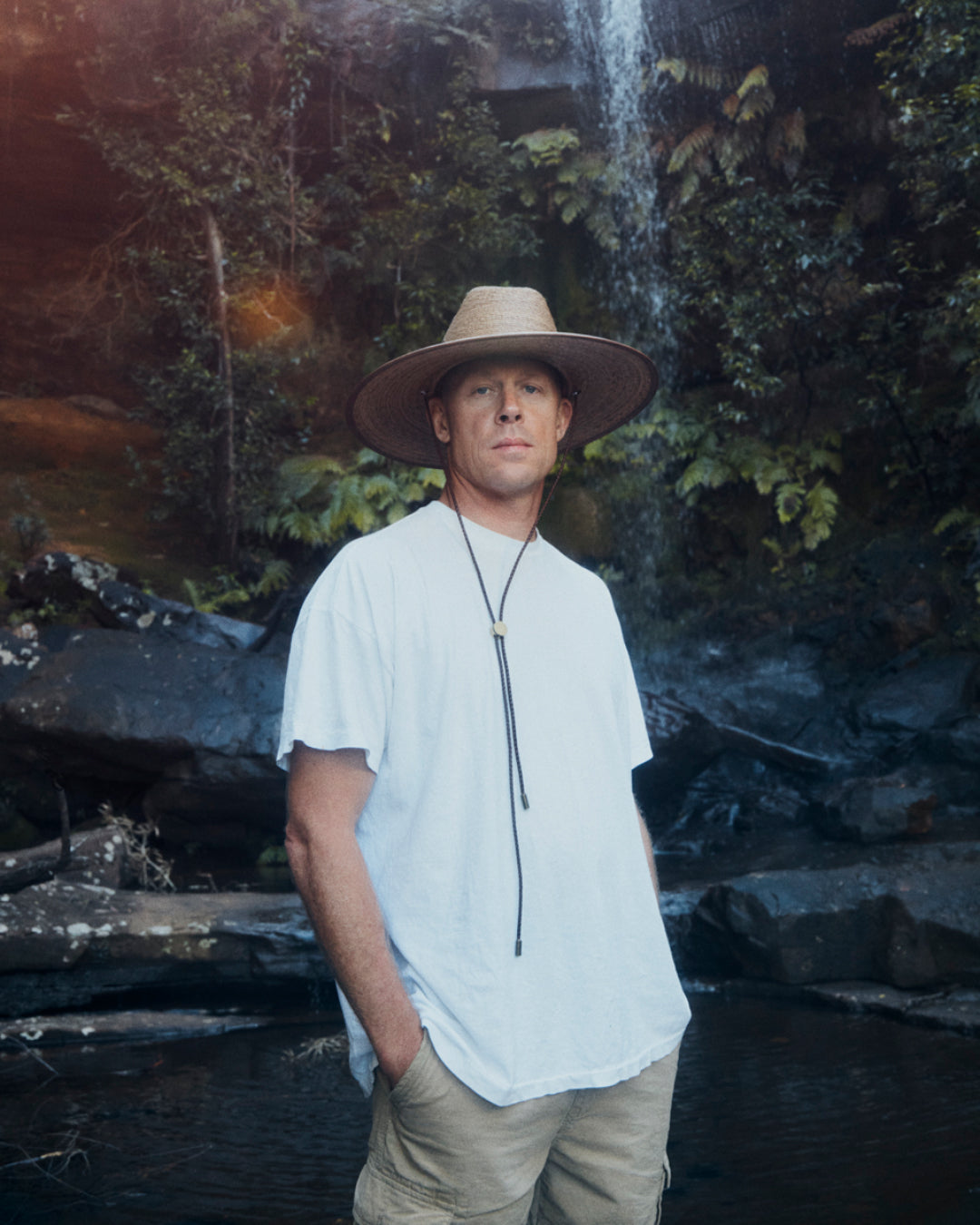
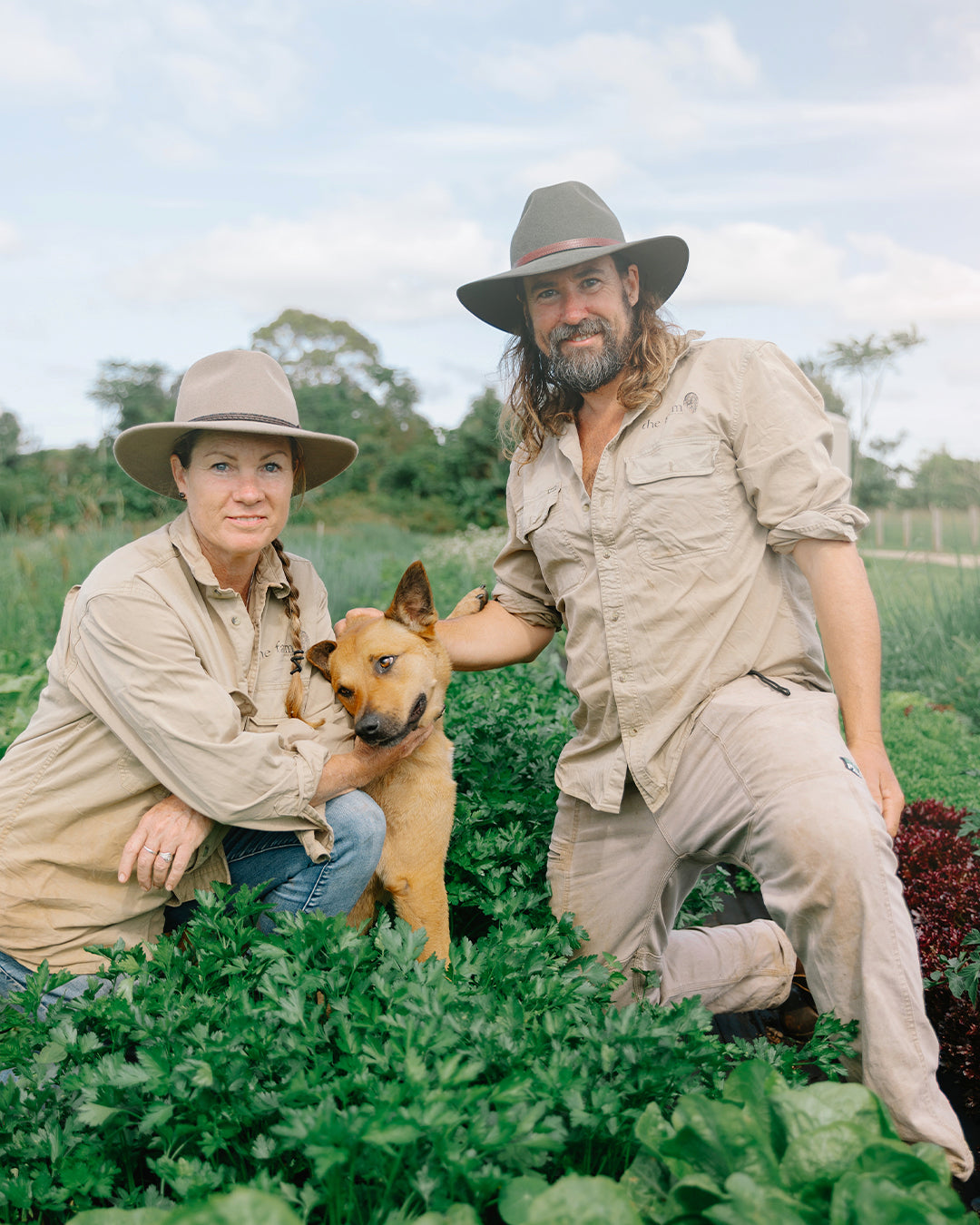
Josh & Lynette Dooley
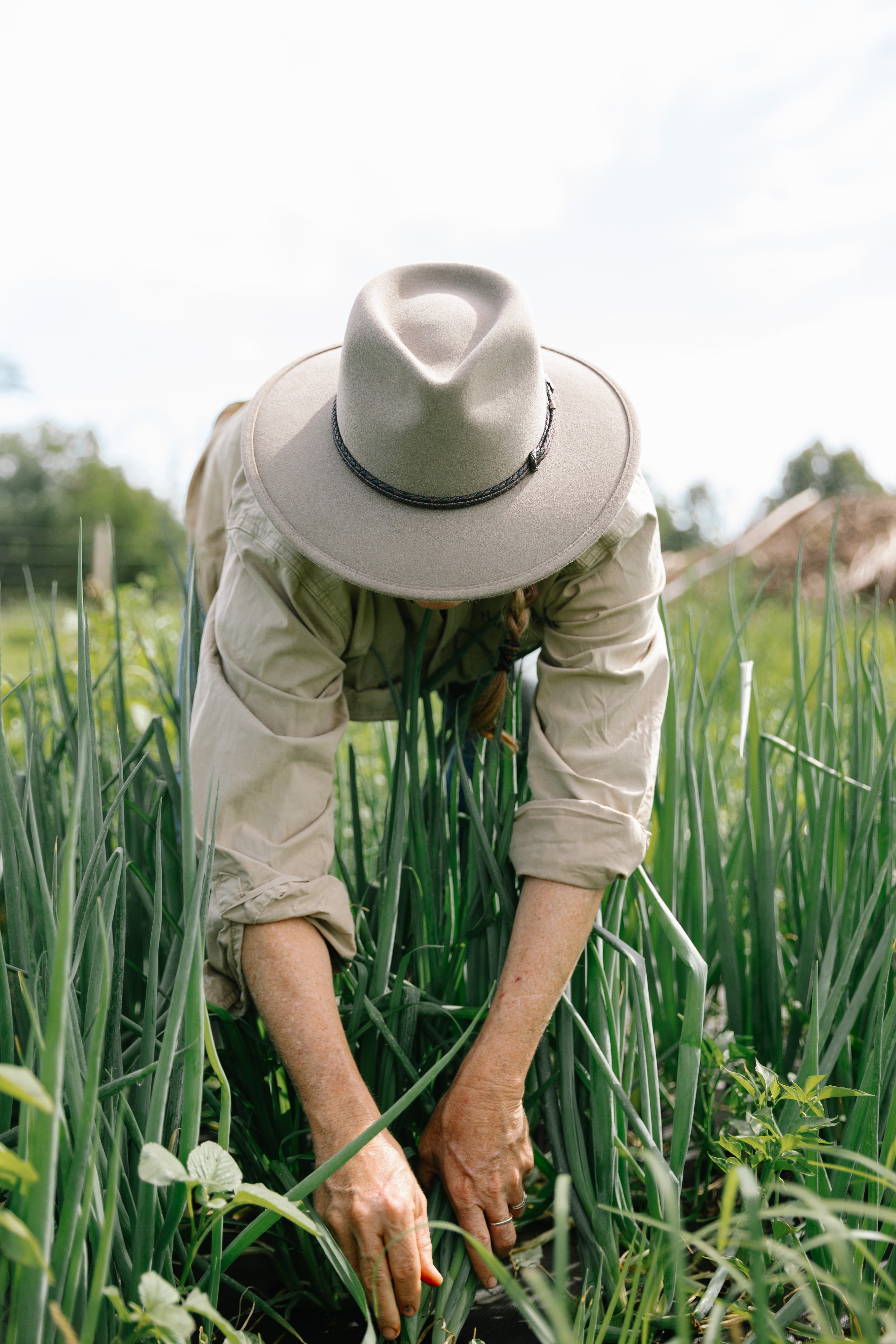
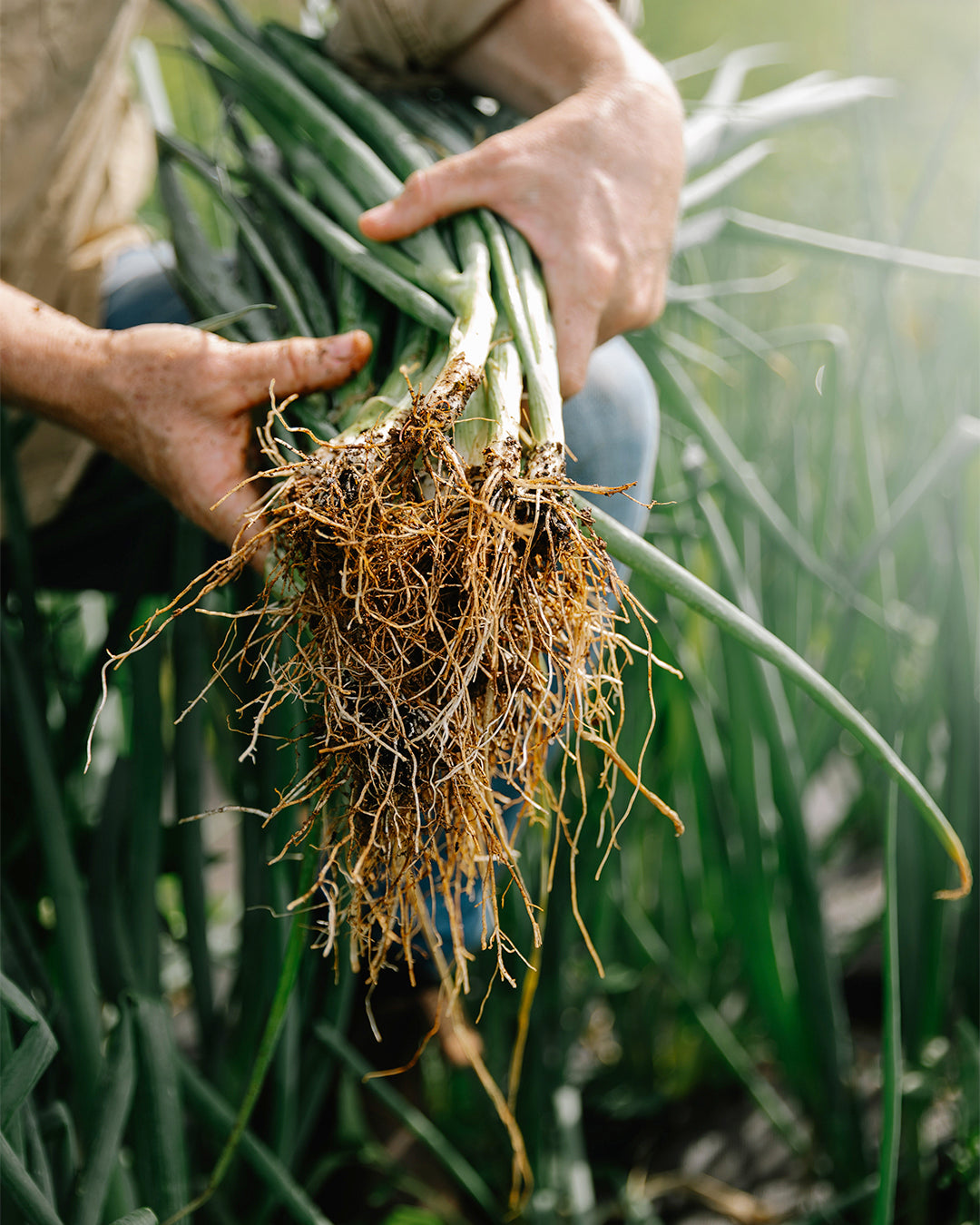
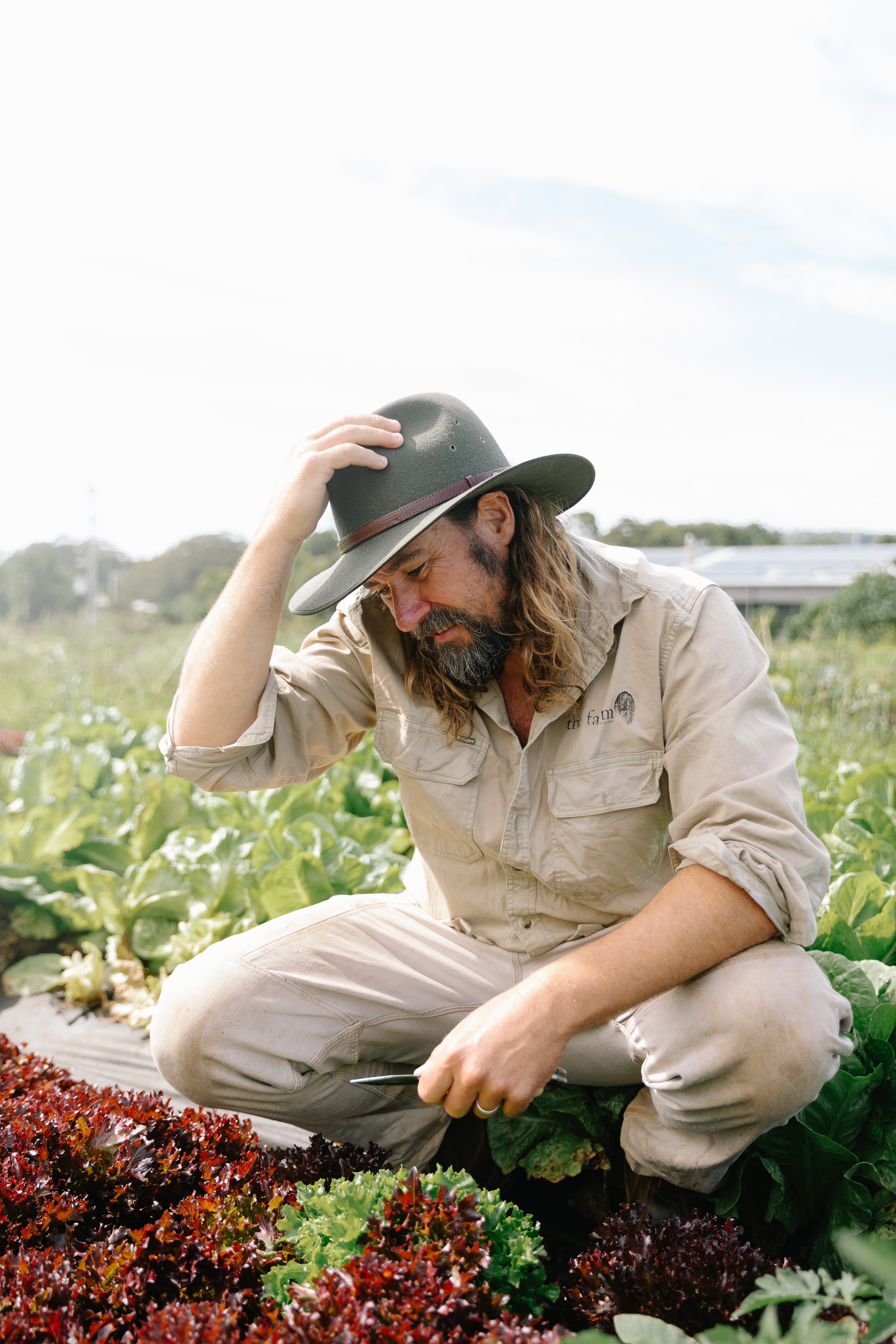
For Josh and Lynette Dooley, healthy soil is the foundation of everything they grow. Through regenerative farming practices and a deep respect for the land, they're producing thousands of organic seedlings and seasonal vegetables each year, proving that small-scale farming in Byron Bay can have a big impact.
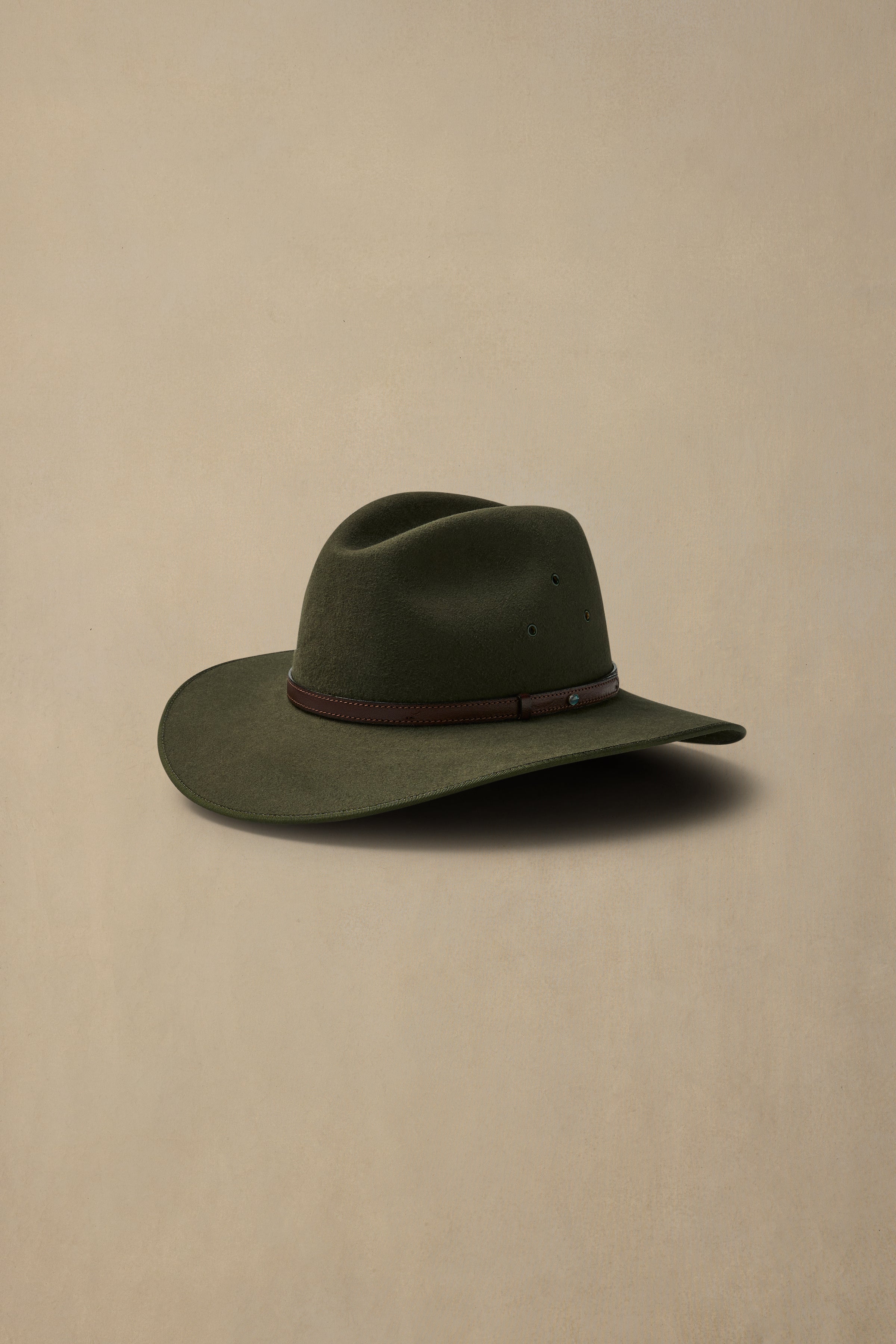
Hats: Coober Pedy in Fern (Josh) & Traveller in Sand (Lynette)
HOW DO YOU GROW ENOUGH FOOD FROM JUST 1.5 ACRES WHILE STAYING TRUE TO REGENERATIVE FARMING?
One of the big things we need to do with our soils is grow plenty of green manure crops and allow periods of fallow to give the soil a rest.
Green manure crops help capture nitrogen from the atmosphere, build organic matter and create humus. By resting the soil and rotating from one block to another, we can ensure that when the next season comes around, we have healthy, rested soil ready to go. The red soils around Byron Bay are hungry for carbon, so compost is also an important part of our system. We use straw mulches, compost teas and worm castings to continually feed and build the soil.
It’s labour-intensive, but it allows us to produce thousands of seedlings every fortnight while building healthier soil year after year.
WHAT ARE THE BIGGEST CHALLENGES OF SMALL-SCALE FARMING IN BYRON BAY TODAY?
There’s the dance we do with Mother Nature. Timing everything around rainfall, drought and changing weather conditions can be challenging at times, not to mention all the animals that love organic produce just as much as we do and are always happy to eat their fair share!
But we’re constantly moving forward, producing thousands of seedlings every fortnight to make sure there’s enough for everybody.
LONG DAYS ON THE FARM DEMAND RELIABLE GEAR. IS THERE AN AKUBRA OR ANOTHER ESSENTIAL YOU'VE RELIED ON FOR YEARS?
Through hot summer days and wet, cold winters, we’re constantly wearing our boots and hats while working the land. And I’m proud to only wear Australian-made products.
Founder of Poppy & Fern, Grower & Florist
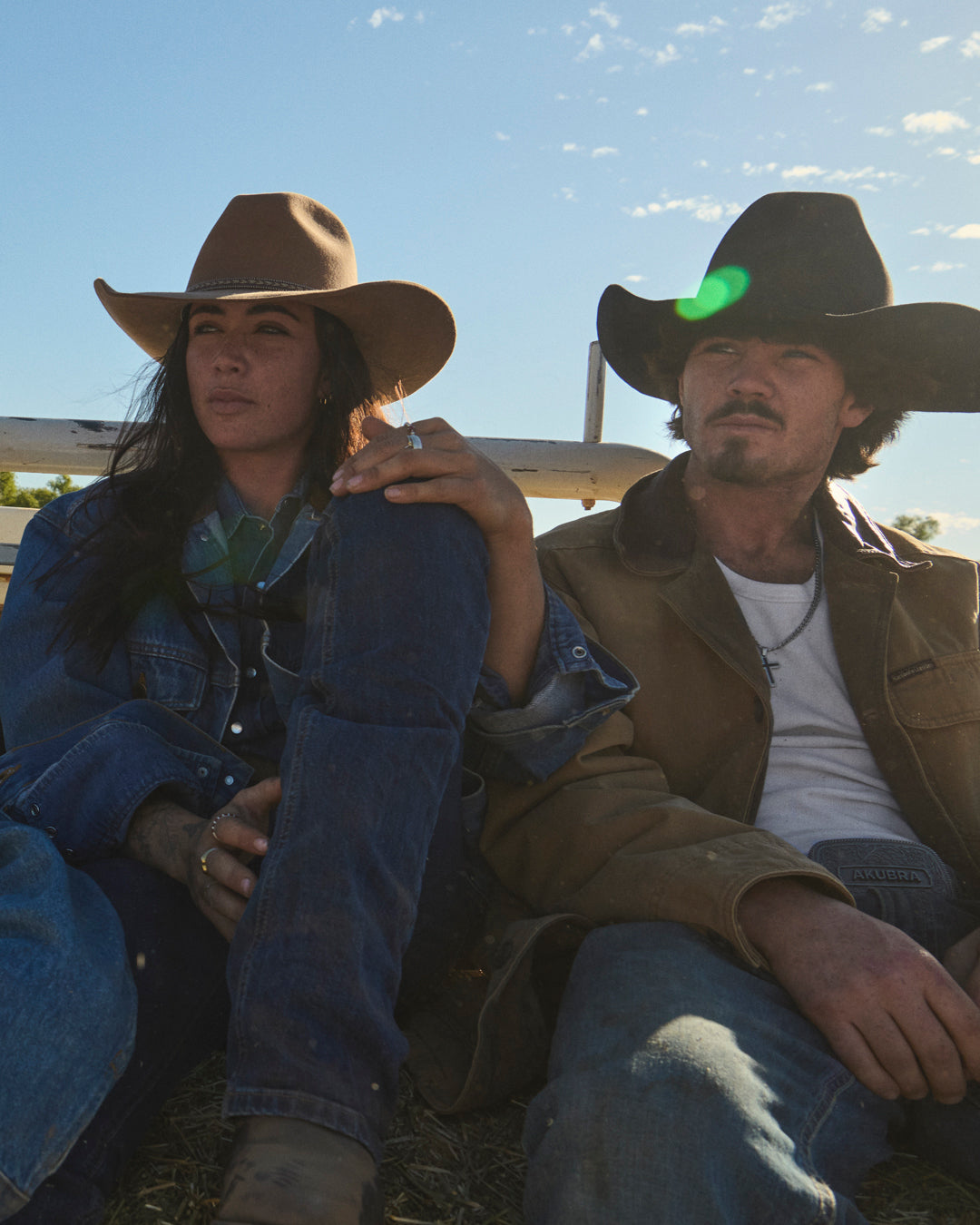
Jess Connor
For Jess, every flower begins with healthy soil and a connection to the seasons. After years as a florist, she found a new purpose growing seasonal flowers in Byron Bay, where biodiversity, sustainability and community are at the heart of everything she does.
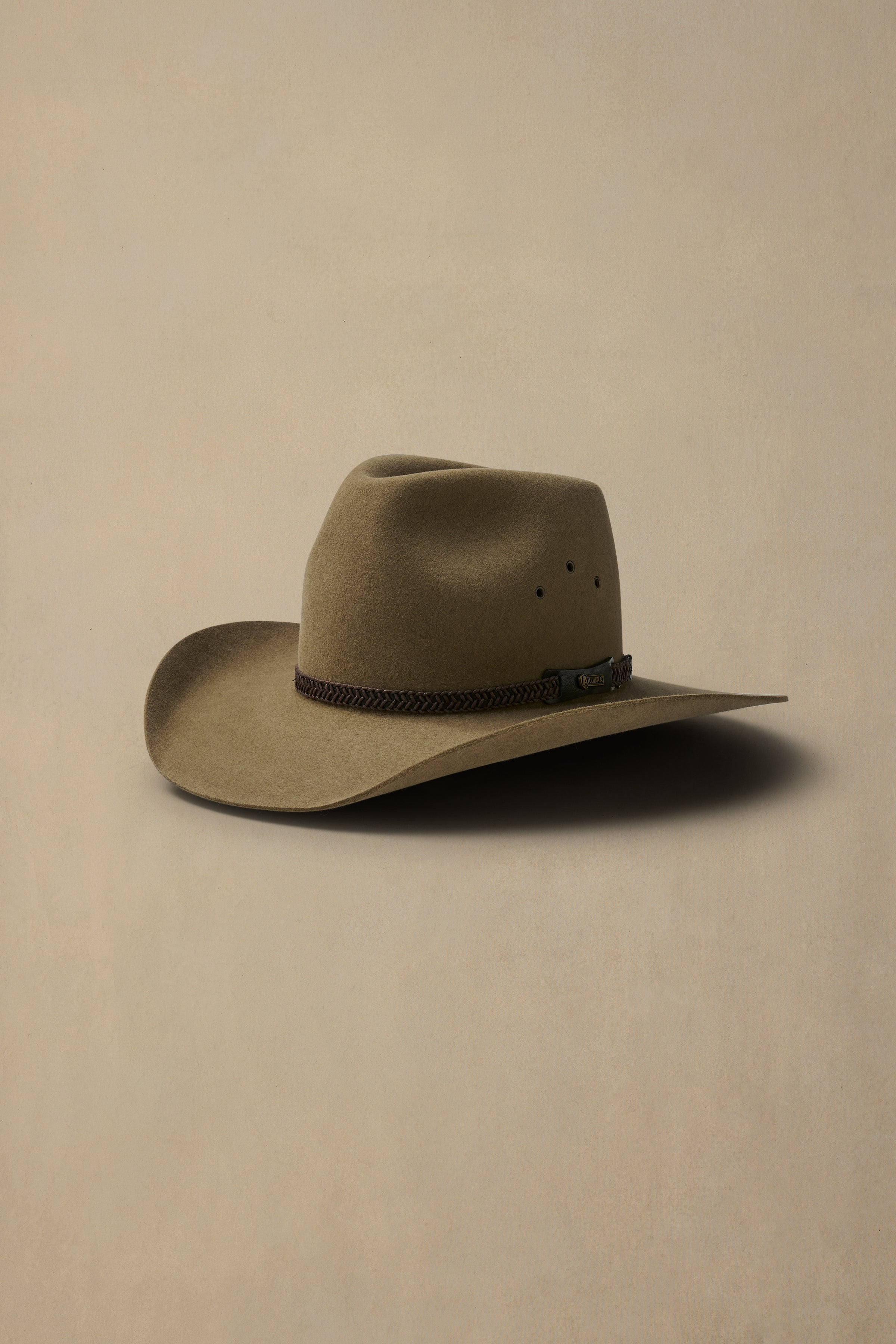
Hat: Coober Pedy in Sand
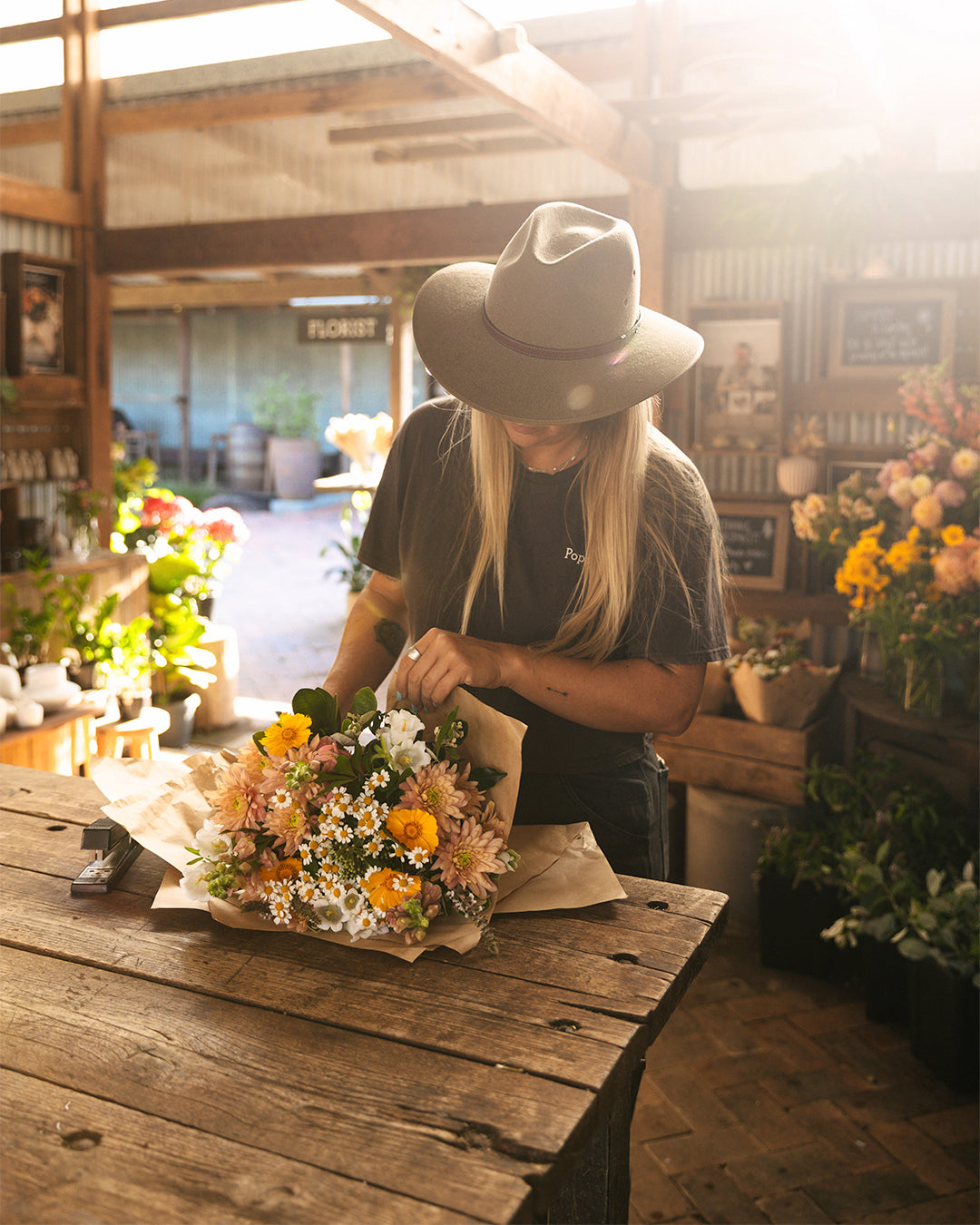
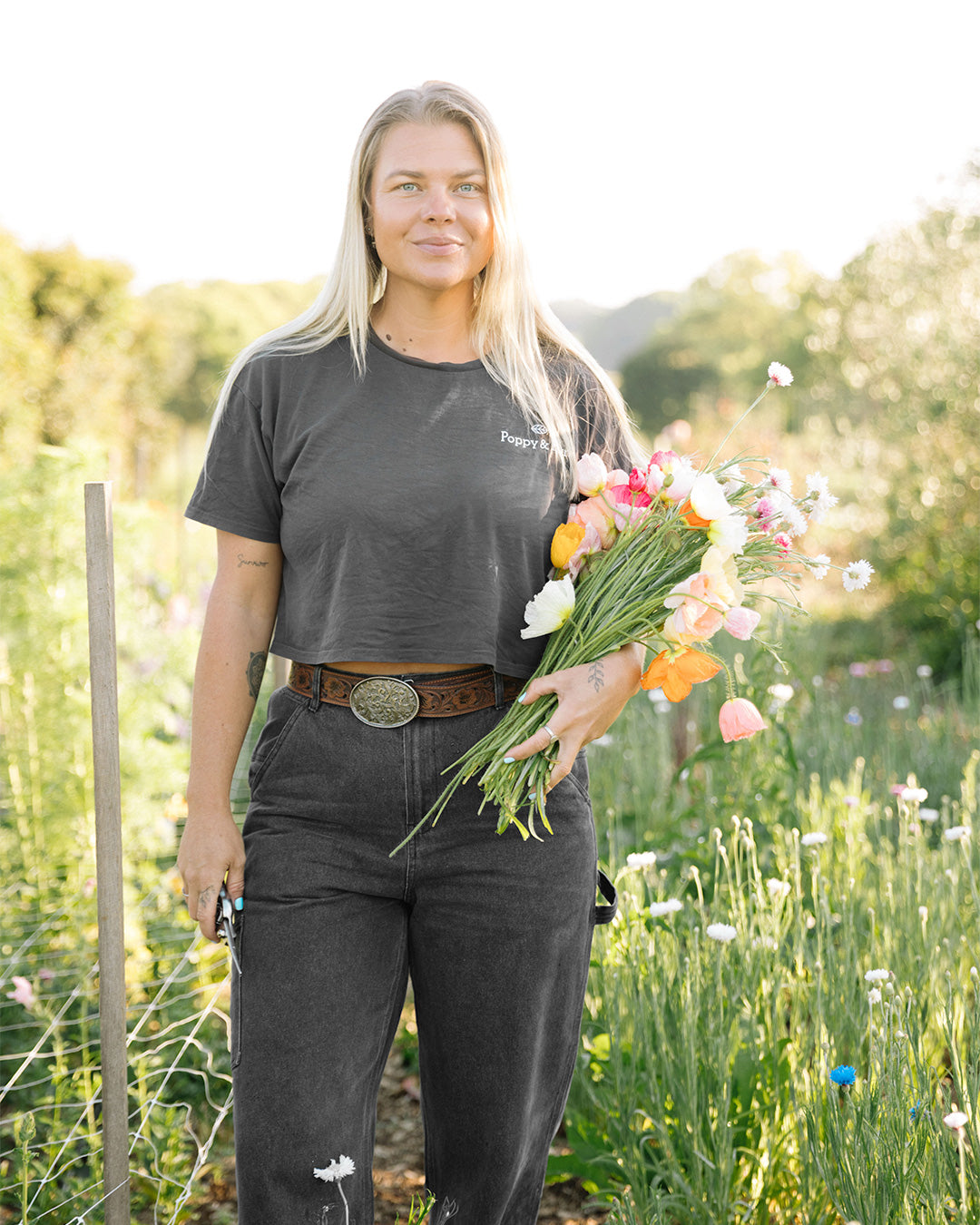
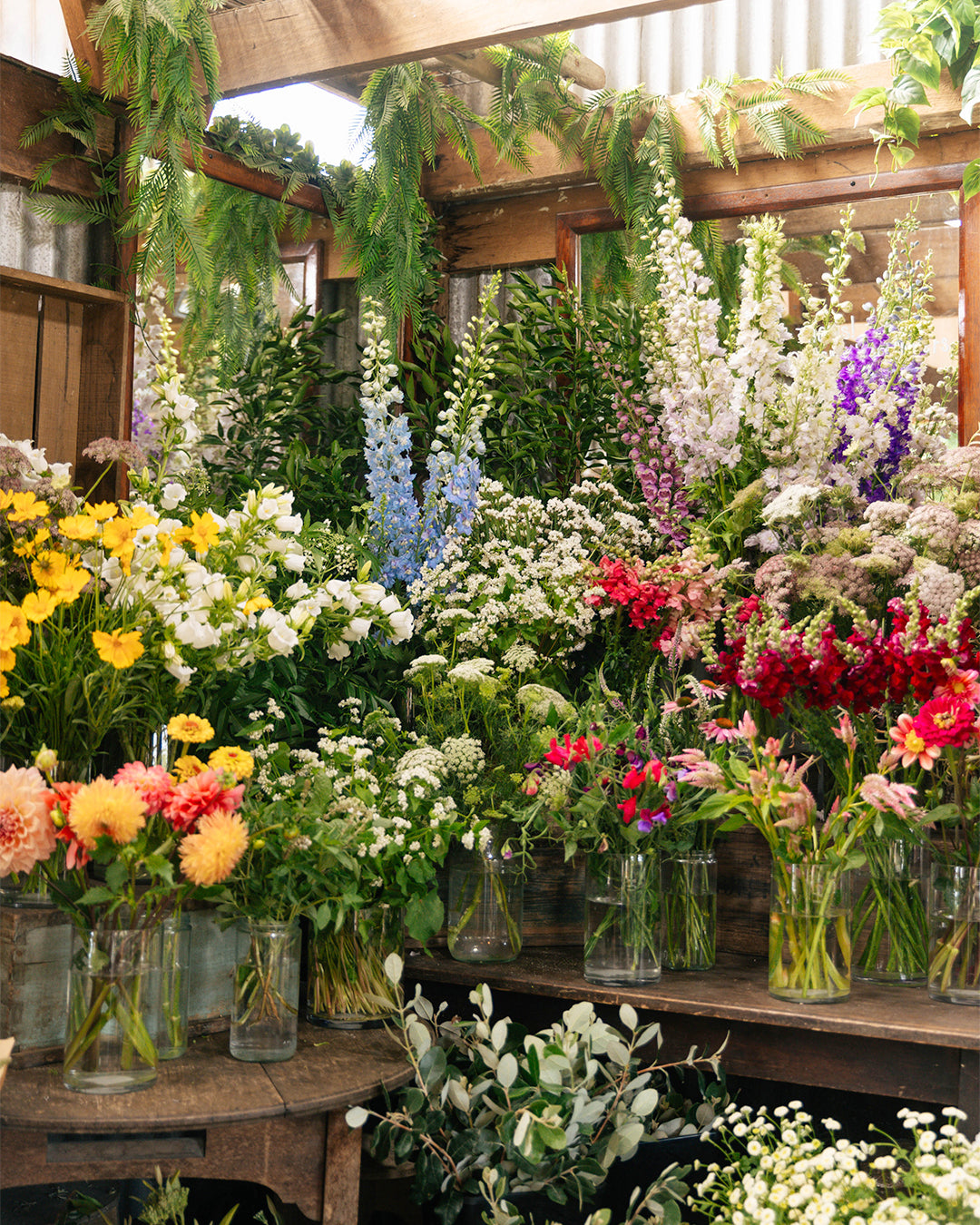
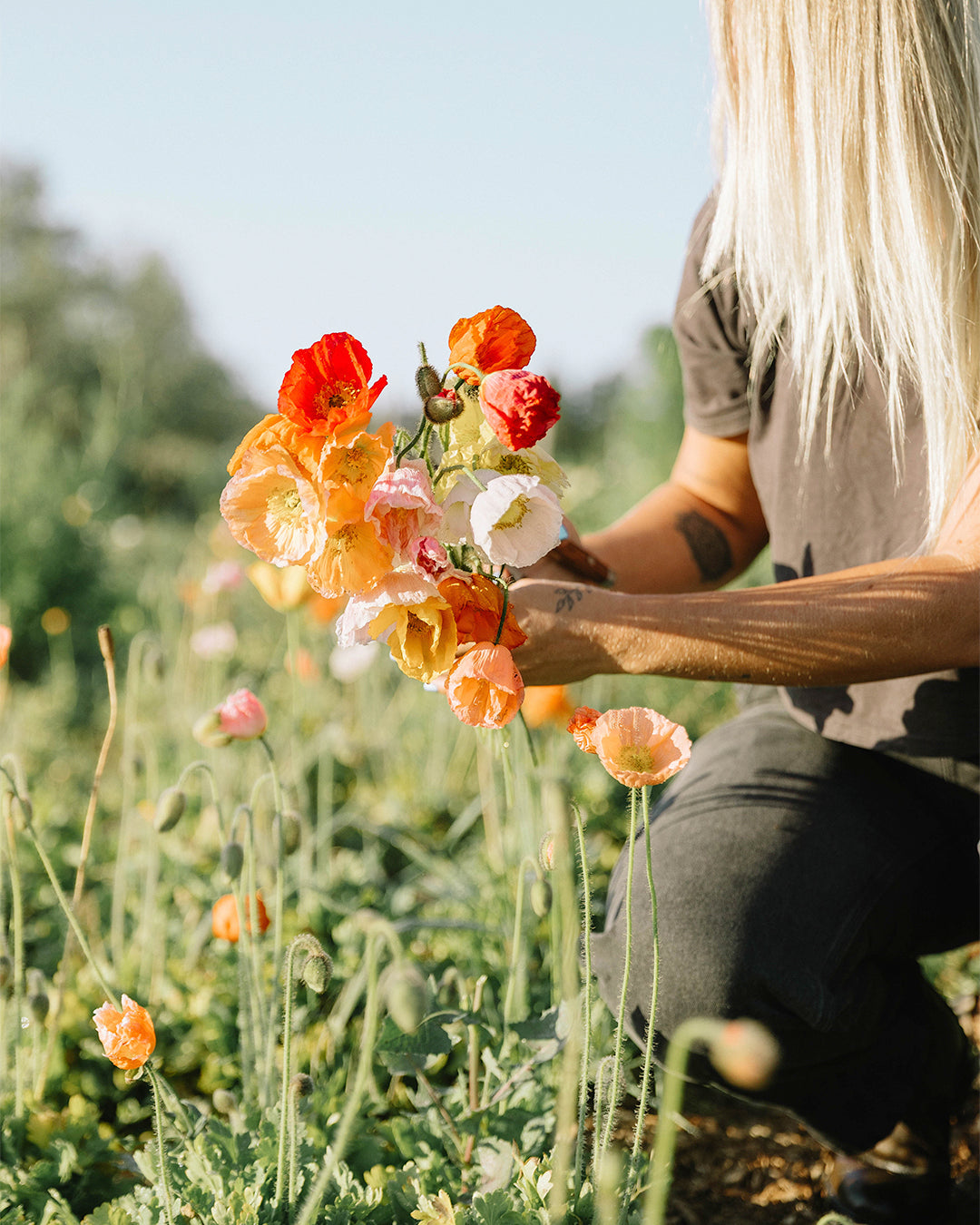
WHY IS GROWING FLOWERS LOCALLY SO IMPORTANT TO YOU?
I spent about 15 years working as a florist before I ever grew my first flower. And if I’m honest, somewhere along the way I’d become disconnected from where flowers actually came from.
Growing flowers changed that.
Now one of my favourite parts of what we do is sharing the story behind the flowers. I want people to know where they came from, who grew them and what season they’re a part of. Whether they’ve come from our flower field just 800 metres down the road or from another incredible local grower, every bunch has a story worth telling. I think when you know that story, your connection to those flowers becomes so much deeper.
Growing locally has also connected me with an amazing community of flower growers. Farming can sometimes feel a little lonely, but sharing knowledge, supporting one another and celebrating each other’s wins reminds you that you’re part of something much bigger.
I also love that growing locally reconnects us with the seasons. Not every flower should be available all year round. There’s something really special about waiting for the first dahlias of summer or the first ranunculus of winter. I think nature has a lot to teach us if we’re willing to slow down and pay attention.
HOW DO HEALTHY SOILS AND BIODIVERSITY SHAPE THE FLOWERS YOU GROW?
Healthy soil is where it all begins.
Before I started growing flowers, I never really thought about everything happening beneath the surface. But now I know that healthy soil grows healthy plants, and healthy plants grow beautiful flowers.
We’re always trying to build our soil by composting our green waste back into the field, adding organic matter and looking after the life beneath our feet.
Biodiversity is just as important. I love seeing bees, butterflies, ladybirds and all the other insects that call the field home. They’re all part of keeping everything healthy and in balance.
I truly believe all of those things become part of the flowers we grow. Healthy soil, biodiversity, the changing seasons and the care that goes into every plant all contribute to something you can’t always see, but you can definitely feel. I like to think that’s part of the magic.
I’m still learning every day, but I think the best flowers come from working with nature, not against it.
DO YOU HAVE AN AKUBRA OR ANOTHER OUTDOOR ESSENTIAL THAT'S ALWAYS WITH YOU ON THE FARM?
I’m pretty simple really. The things you’ll find with me almost every day are my Akubra, a good coffee, my secateurs, some music playing and my kelpie, Daisy, keeping me company.
Proud Pastures Cattle Farmer & Operations Manager At The Farm
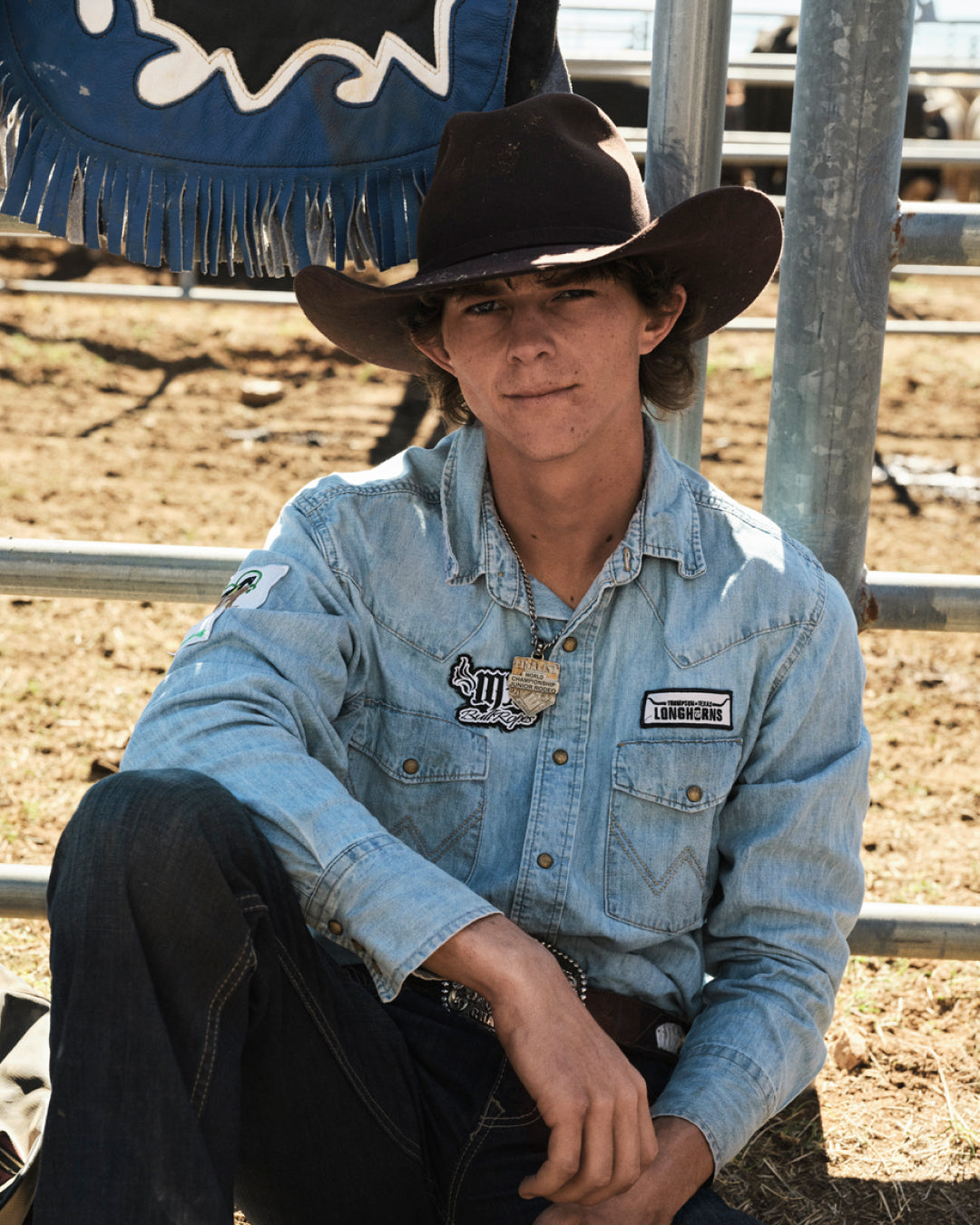
Jordy Vacchiano
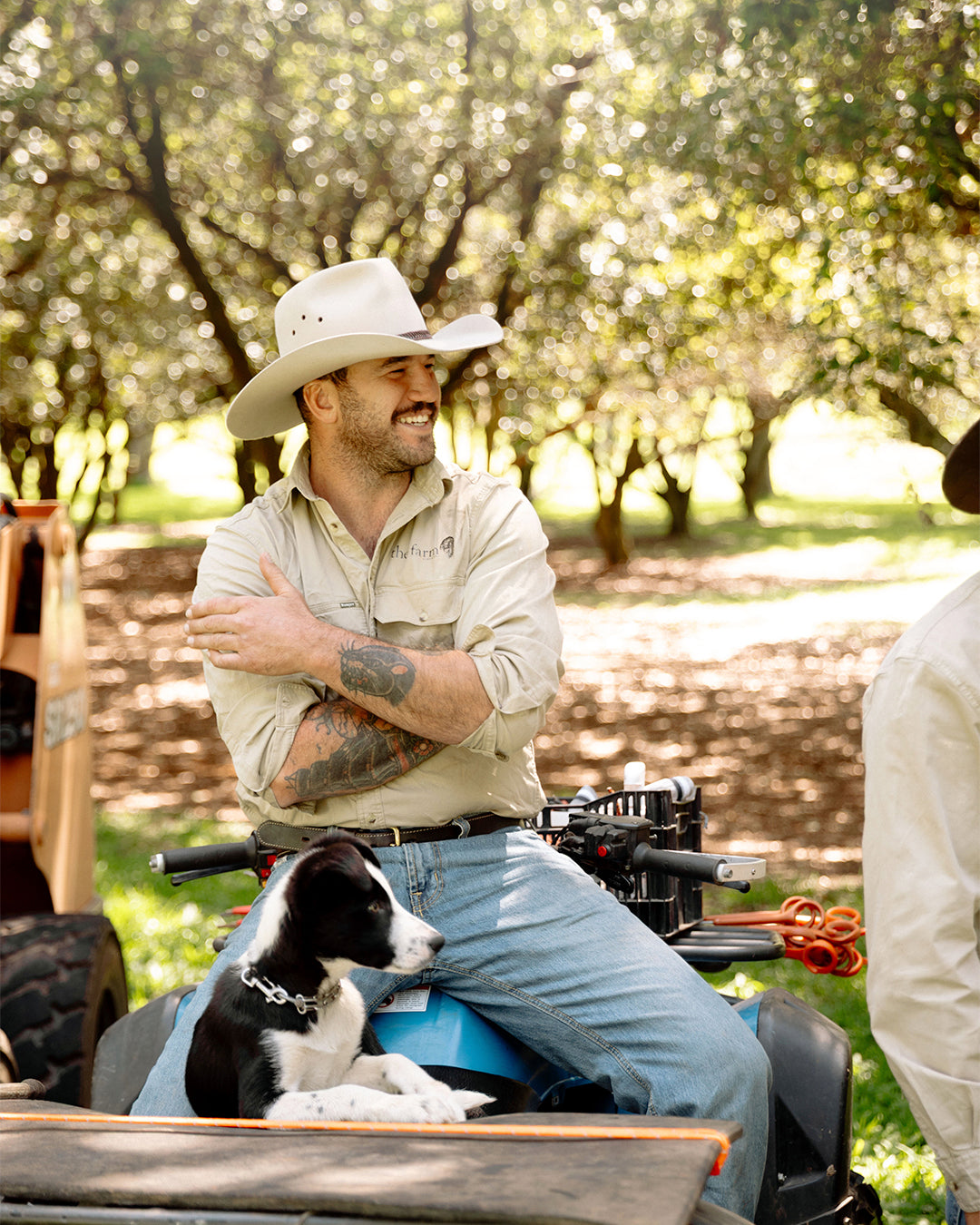
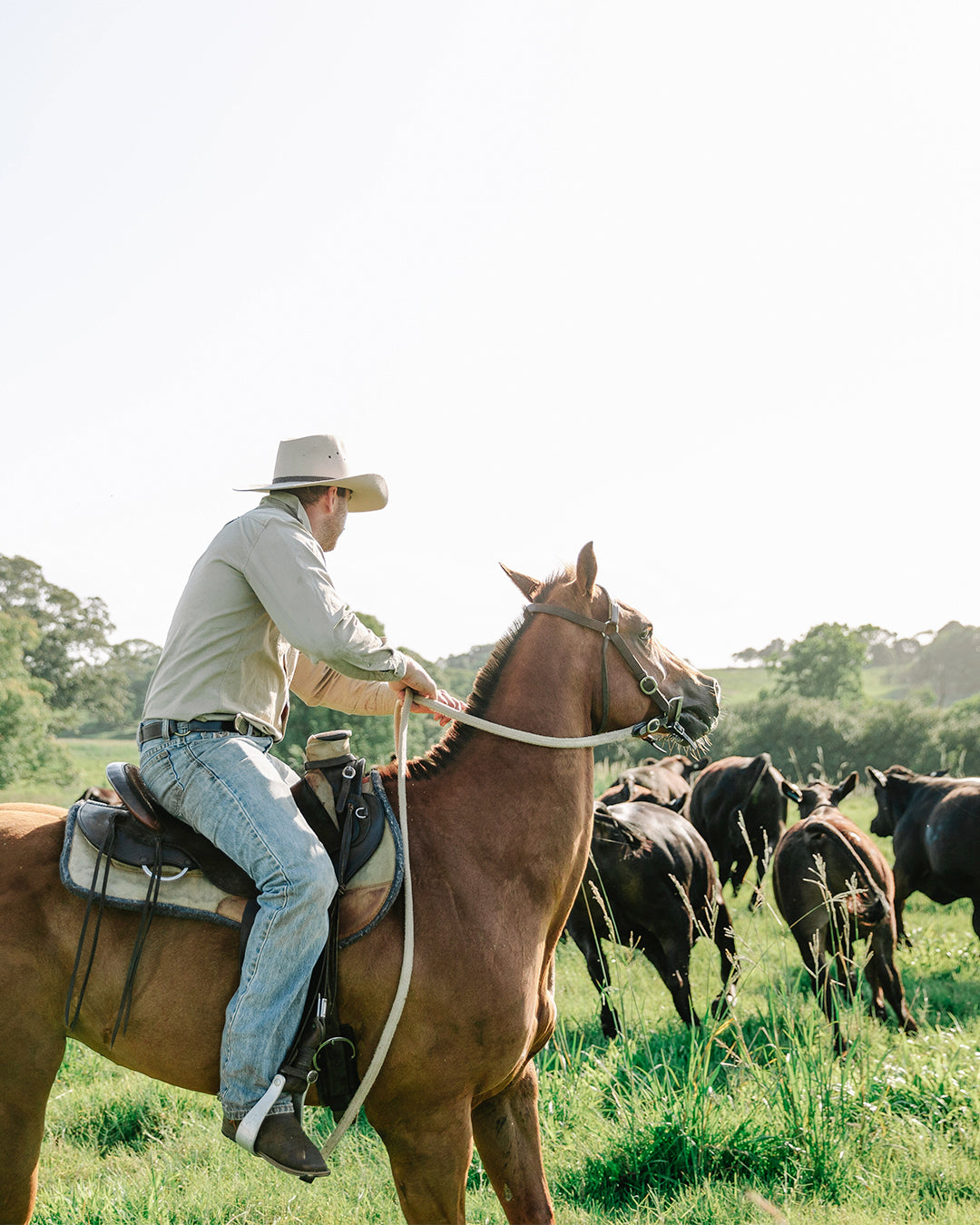
As Operations Manager at The Farm at Byron Bay and the driving force behind Proud Pastures, Jordy is passionate about raising grass-fed, grass-finished cattle through holistic farming practices. His approach is built on observation, patience and a commitment to working with nature—not against it.
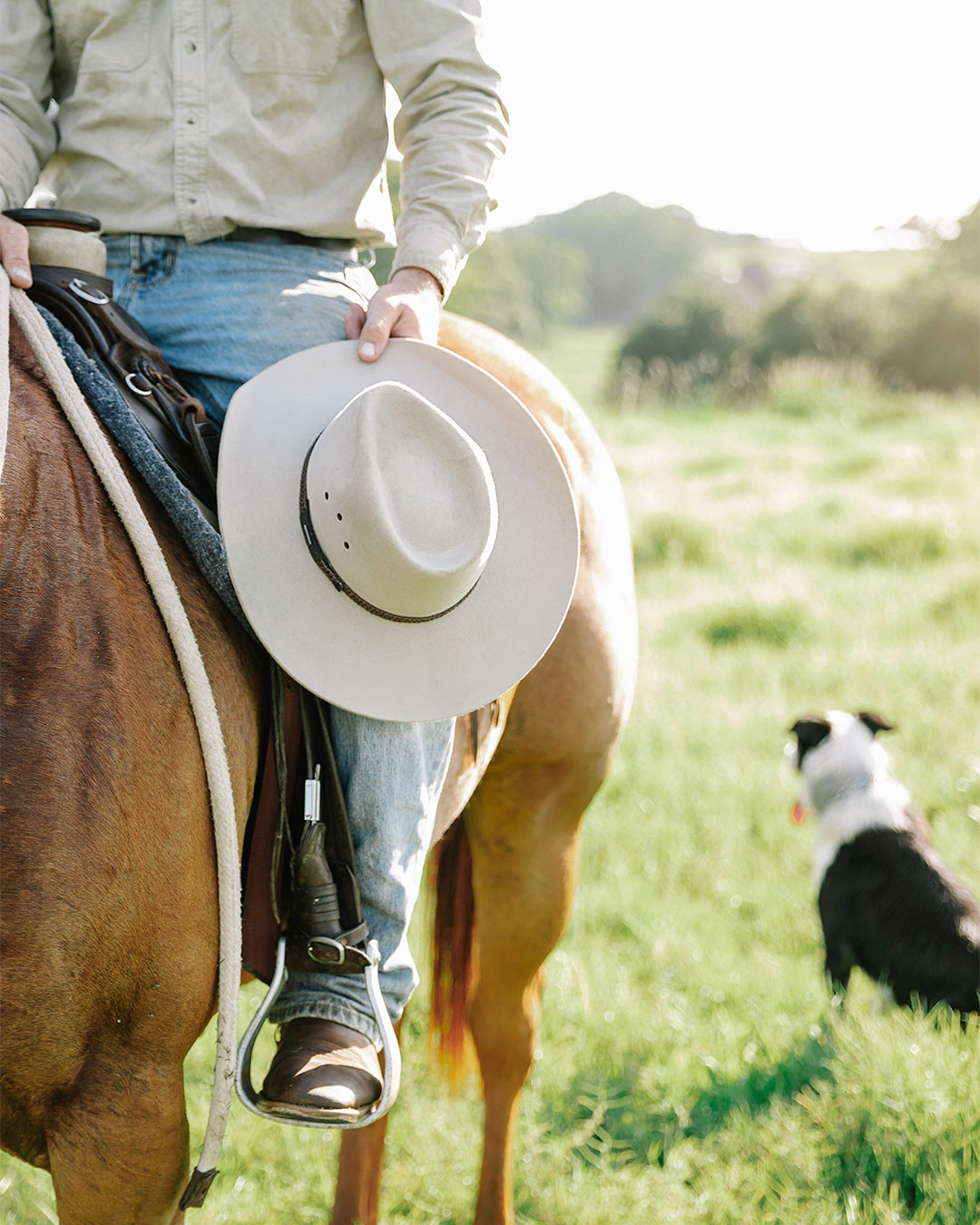
Hat: Golden Spur in Sand
WHAT DOES HOLISTIC CATTLE MANAGEMENT LOOK LIKE IN PRACTICE AT THE FARM?
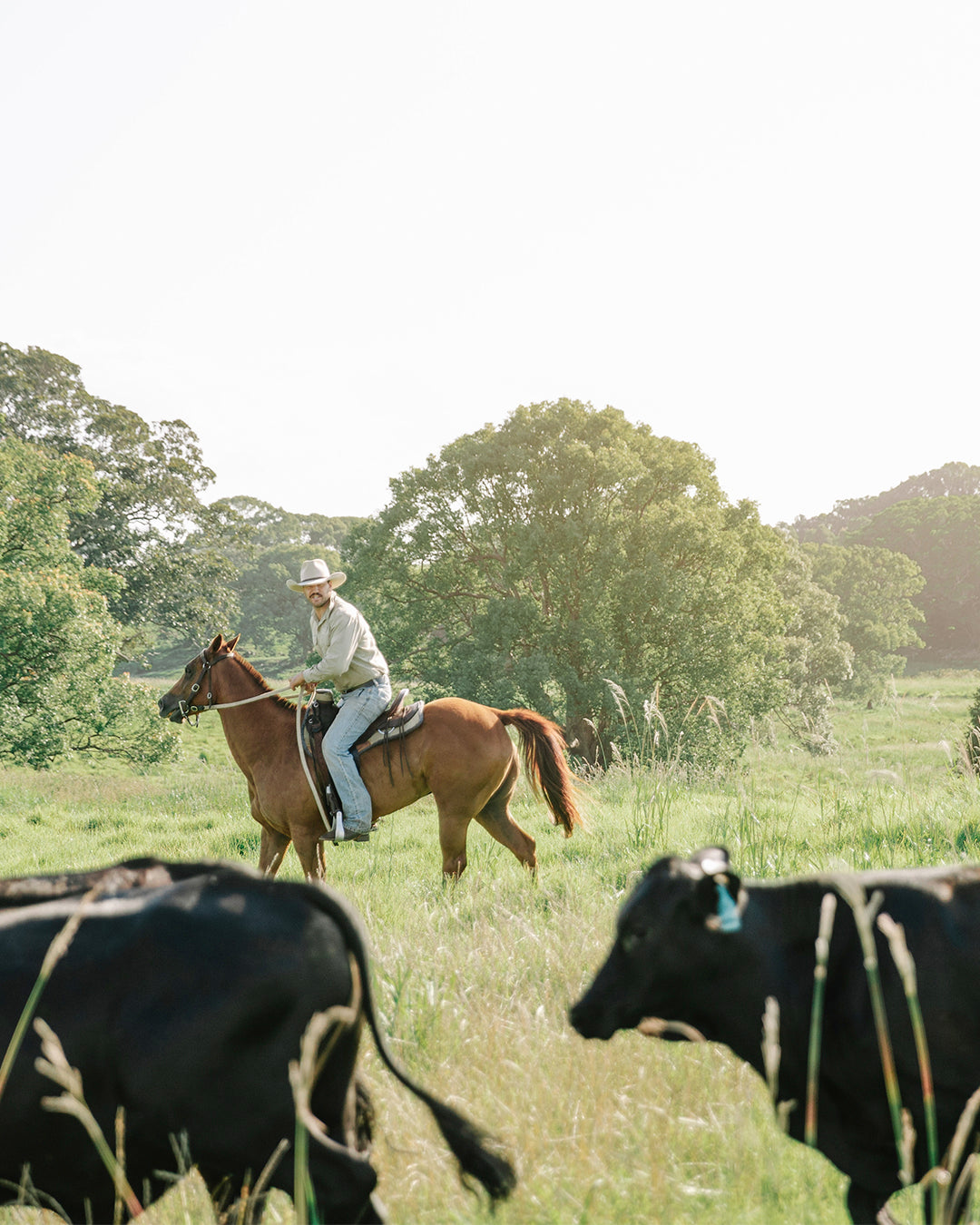
A lot of trial and error, really. We raise grass-fed, grass-finished Brangus cattle and use cell grazing, moving them onto fresh feed every 24 to 48 hours.
It can all sound pretty straightforward on paper, but every paddock, season and animal is different. You have to keep watching the cattle, the feed and the conditions, and adjust as you go.
The holistic side is about trying to avoid chemicals and traditional treatments where we can, and being willing to look outside the box. We use free-choice minerals, sulphur and natural approaches to managing buffalo fly. We run Brangus for the balance of Brahman parasite resistance and Angus marbling, and we've also been testing things like SeaFeed to help reduce methane from belching.
The cattle get a say in it too. When we move them through our planting of close to 750 native trees, you can watch different animals seek out particular species - almost like they’re self-medicating. You can try plenty of things, but they’ll only take to what works for them. A lot of it comes back to observation, talking to other farmers and being willing to change your approach.
WHAT'S THE BIGGEST LESSON CATTLE HAVE TAUGHT YOU ABOUT STOCKMANSHIP?
Patience. All the patience in the game.
When you’re with cattle every day, moving them constantly and trying to use the feed and the property to their full potential, you learn that you have to work with them. These are 550-kilogram-plus animals being contained by little electric fence lines—they could choose to hop out whenever they wanted.
Good dogs are important, but so is choosing calves carefully and keeping cattle that are quiet and non-aggressive, especially when you’re farming in town. You don’t want cattle out on the road or the highway.
You can’t take their cooperation for granted. Good stockmanship comes down to understanding the cattle in front of you, staying calm and having the patience to work with them.
WHEN YOU'RE OUT IN THE PADDOCKS ALL DAY, WHAT ROLE DOES PRACTICAL GEAR, LIKE AN AKUBRA, PLAY?
Around here, we have blistering summers. With a collared shirt and a big hat, you’re pretty well protected from the big star in the sky.
An Akubra comes in handy for everything from keeping your skin safe to giving the dogs a drink when there isn’t a bowl around. I’ve been known to fill mine from the tap for them. Being rabbit felt, it holds the water. Then you chuck it back on your head and keep going.
I’ve had plenty of Akubras over the years. It’s hard to keep any hat in perfect condition when you’re working cattle, in the yards or on a horse, but they’re just bloody tough. You can’t really go past them if you’re looking for something durable that’s going to do the job.